An Unbroken Chain Since 1073 CE The Sakya Lineage & Legacy

Est. 1073 CE — Nearly 1,000 Years of Transmission

The Sakya lineage represents one of the most extraordinary spiritual dynasties in human history — a hereditary family tradition of Buddhist masters that has maintained unbroken transmission of the most profound tantric teachings for approaching a millennium.

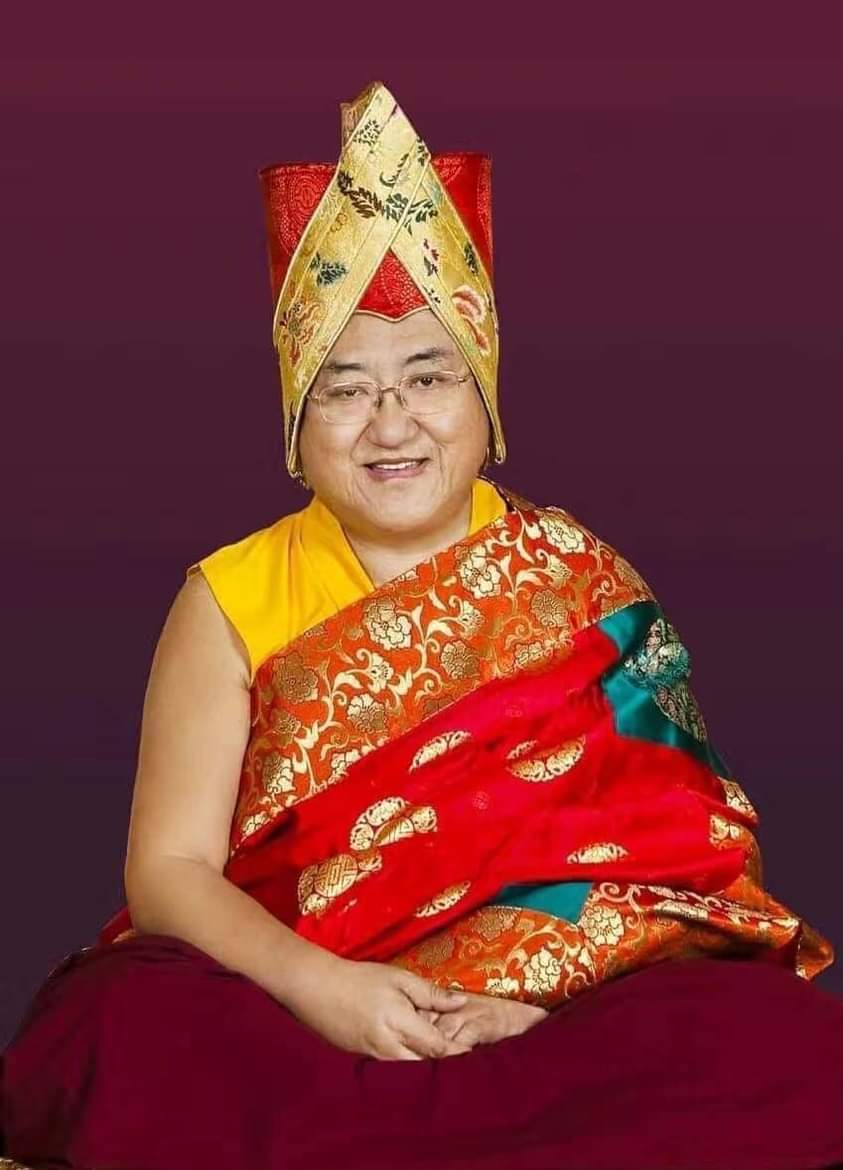
His Holiness the 41st Sakya Trizin seated in blessing posture, the embodiment of the unbroken Khön family lineage spanning nearly a millennium

The Founding of a Sacred Dynasty

Origins of the Khön Lineage

The Sakya lineage traces its origins to the ancient Khön family, whose spiritual heritage extends far beyond the founding of the Sakya Monastery. According to Tibetan tradition, the Khön clan descends from celestial beings who came to Earth during a primordial age. The family's involvement with Buddhism began in the 8th century, when Khön Lu'i Wangpo Sungwa was among the first seven Tibetans ordained as Buddhist monks by the great Indian master Shantarakshita.

The decisive moment came in 1073 CE, when Khön Könchok Gyalpo established the Sakya Monastery in the Tsang region of central Tibet. The name "Sakya" derives from the Tibetan words meaning "pale earth," referring to the distinctive grey-white color of the region's soil. This monastery would become the seat of one of the four great schools of Tibetan Buddhism and the center of a spiritual and political dynasty that at its height controlled much of Tibet.

What makes the Sakya lineage unique among Tibetan Buddhist traditions is its hereditary nature. Unlike the other major schools, which rely on reincarnation (tulku) systems to identify their leaders, the Sakya tradition passes spiritual authority through a single family line — the Khön dynasty. This means that the throne holders of the Sakya school are always descendants of the founder, creating an unbroken bloodline of spiritual masters that has endured for nearly a thousand years.

The Sakya lineage is like a great river — its source lies in the snowbound peaks of ancient Tibet, but its waters nourish the spiritual thirst of beings across the entire world.

The early Sakya masters were towering figures of Buddhist scholarship and realization. The "Five Venerable Superiors of Sakya" — Sachen Kunga Nyingpo (1092–1158), Sonam Tsemo (1142–1182), Jetsun Drakpa Gyaltsen (1147–1216), Sakya Pandita Kunga Gyaltsen (1182–1251), and Drogön Chögyal Phagpa (1235–1280) — established the Sakya school as a center of intellectual and spiritual excellence unmatched in the Buddhist world.

Sakya Pandita, in particular, was recognized as one of the greatest scholars in Tibetan history. His works on logic, epistemology, and Buddhist philosophy became foundational texts studied across all schools of Tibetan Buddhism. His nephew, Chögyal Phagpa, became the Imperial Preceptor of the Mongol Emperor Kublai Khan, establishing a priest-patron relationship that profoundly shaped the course of Asian history.
A Millennium of Sacred Transmission

The Dynasty Through the Ages

8th Century

Khön Lu'i Wangpo Sungwa

Among the first seven Tibetans ordained as Buddhist monks by the Indian master Shantarakshita. This marked the Khön family's entry into the formal Buddhist path, setting the stage for their eventual founding of the Sakya school.

1073 CE

Khön Könchok Gyalpo — The Founding

Established the Sakya Monastery on the "pale earth" of Tsang. This founding moment created the institutional and spiritual center of what would become one of the four great schools of Tibetan Buddhism, initiating the hereditary throne-holder system that endures to this day.

1092–1280

The Five Venerable Superiors

Five extraordinary masters — from Sachen Kunga Nyingpo to Chögyal Phagpa — who established the Sakya school's philosophical foundations, received and codified the Lam Dre teachings, and expanded Sakya's influence to encompass much of Central Asia under the Mongol-Sakya relationship.

13th–14th Century

The Age of Political Power

Under the priest-patron relationship with the Mongol Yuan Dynasty, Sakya lamas served as spiritual advisors and de facto rulers of Tibet. Phagpa Lama's creation of a new script for the Mongol Empire and his role as Imperial Preceptor represented the apex of Sakya's temporal influence.

15th–19th Century

Preservation & Scholarly Development

After the shift of political power, the Sakya school focused intensely on preserving and developing its unique philosophical and meditative traditions. Great scholars continued to produce commentaries, practice manuals, and philosophical treatises that enriched the school's intellectual heritage.

1945–Present

The 41st Sakya Trizin — Global Expansion

His Holiness Ngawang Kunga carried the Sakya tradition through the catastrophe of exile and into global prominence, establishing centers worldwide and ensuring that this ancient wisdom tradition would not only survive but flourish in the modern age.

The Sacred Title

Understanding "Sakya Trizin"

ས་སྐྱ Sakya

"Pale Earth" — referring to the distinctive grey-white soil of the region where the original monastery was founded in 1073 CE. The name evokes the earth itself as the foundation of spiritual practice and the purity of the tradition.

ཁྲི Tri (Throne)

The sacred throne — both the physical seat of spiritual authority within the monastery and the symbolic embodiment of the unbroken chain of wisdom transmission from master to student across nearly a millennium of practice.

འཛིན Dzin (Holder)

The one who holds and maintains — not merely a title, but a sacred responsibility to preserve, protect, and transmit the complete corpus of Sakya teachings for the benefit of future generations and all sentient beings.

Why Lineage Matters

The Power of Unbroken Transmission

In Tibetan Buddhism, lineage is not merely a matter of historical record — it is understood as the living conduit through which the blessings and realizations of the original masters flow to practitioners in the present. Each link in the chain of transmission carries the full weight of the accumulated spiritual experience of all who came before.

The Sakya lineage is particularly significant because it combines two forms of transmission that are usually separate: the hereditary bloodline of the Khön family and the spiritual transmission of specific tantric teachings. This means the Sakya throne holders carry both a genetic and a spiritual inheritance — they are the living nexus of biological and transcendent continuity.

For practitioners, receiving teachings from a master with such deep lineage credentials is considered especially auspicious. The blessings are understood to be particularly potent because they flow through an unbroken and undiluted channel — each master in the chain having fully realized the teachings before passing them to the next generation.

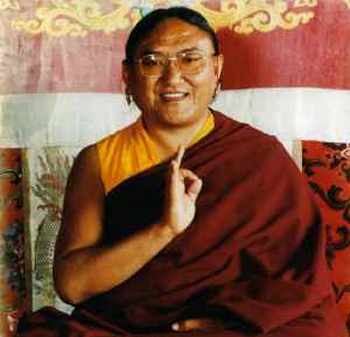
His Holiness the 41st Sakya Trizin performing a blessing mudra, his hand raised in the sacred gesture that transmits the spiritual power accumulated across generations