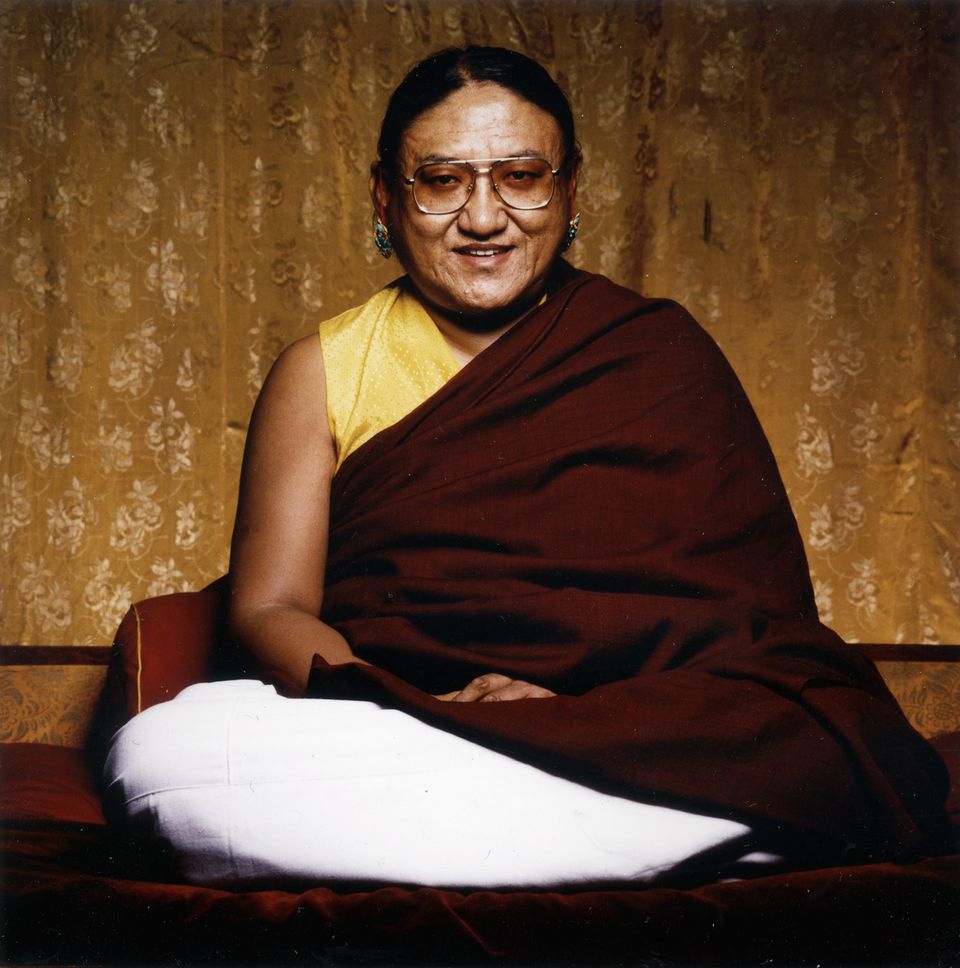
Young Sakya Trizin Ngawang Kunga in traditional monastic attire during his early years, displaying the gentle bearing and spiritual gravitas that marked his recognition as throne holder

A Life Devoted to the Dharma

Biography & Early Life

The remarkable life of His Holiness the 41st Sakya Trizin spans the most tumultuous era in Tibetan history — from the serene monasteries of pre-invasion Tibet to the challenging years of exile, and ultimately to the global dissemination of one of Buddhism's most profound spiritual traditions.

🎂 Born: September 7, 1945 — Tsedong, Near Shigatse, Tibet

The Sacred Path of a Lifetime

Life Chronicle

1945

Birth in the Shadow of Mount Everest

Born Ngawang Kunga on September 7, 1945, in the Tsedong district near the ancient city of Shigatse, Tibet — the traditional seat of the Panchen Lamas and a major center of Tibetan Buddhist civilization. His birth was accompanied by auspicious signs that marked him as a being of extraordinary spiritual destiny. The Khön family, into which he was born, had maintained an unbroken spiritual lineage for over 900 years.

1952

Recognition as Sakya Trizin

At the age of seven, following the passing of his uncle and predecessor, the young Ngawang Kunga was formally recognized and confirmed as the 41st Sakya Trizin by His Holiness the 14th Dalai Lama. This recognition carried immense significance — it meant that this child would become the supreme head of one of the four great schools of Tibetan Buddhism, responsible for preserving and transmitting some of the most profound and esoteric teachings in the Buddhist tradition.

1952–1959

Intensive Monastic Training

The years following his recognition were marked by extraordinarily rigorous spiritual training under the greatest masters of the Sakya tradition. He received the complete transmission of the Lam Dre — the "Path and Its Result" — the most precious and comprehensive teaching cycle of the Sakya school. He also studied Buddhist philosophy, debate, ritual arts, and meditation practices under the guidance of revered lamas who themselves were living repositories of lineage wisdom.

1959

The Great Upheaval — Enthronement & Exile

In one of history's cruelest ironies, 1959 brought both the formal enthronement of the young Sakya Trizin and the devastating Chinese military occupation of Tibet. As monasteries were destroyed and monks scattered, the newly enthroned 14-year-old throne holder faced an impossible choice. With the weight of nearly a millennium of spiritual tradition upon his young shoulders, he made the harrowing journey across the Himalayas into exile in India — carrying with him the irreplaceable scriptures, ritual objects, and living oral transmissions of the Sakya lineage.

1964

Establishing the Sakya Centre in India

After years of refugee hardship, His Holiness founded the Sakya Centre in Mussoorie and later in Rajpur, Dehradun — establishing the institutional foundation for the preservation and continuation of the Sakya tradition in exile. These centers would become the new heart of the Sakya school, serving as monasteries, teaching institutions, and cultural preservation centers for the displaced Tibetan community.

1974

First Western Teaching Tour

His Holiness made his first teaching journey to the West, visiting Europe and North America. This landmark event marked the beginning of the Sakya school's global expansion, as Western students encountered the depth and sophistication of Sakya philosophical and meditative traditions for the first time. His gentle demeanor, profound knowledge, and willingness to engage with Western intellectual traditions made him extraordinarily effective as a bridge between cultures.

2017

Transition of Spiritual Authority

In a historic ceremony, His Holiness formally transferred the title and responsibilities of Sakya Trizin, transitioning the throne to the next generation in accordance with the Khön family tradition. This marked not an end, but a transformation of his role — he continues to be revered as a supreme master and elder statesman of Tibetan Buddhism, while his sons continue the sacred lineage into the future.

Preservation Against All Odds

The Journey Into Exile

The Chinese military occupation of Tibet in 1959 represented not merely a political catastrophe, but an existential threat to one of humanity's most sophisticated spiritual and philosophical traditions. As the People's Liberation Army swept through Tibet, monasteries that had stood for centuries were razed, priceless libraries of sacred texts were burned, and monks and nuns were subjected to brutal persecution.

For the newly enthroned 41st Sakya Trizin, then just fourteen years old, the situation was especially dire. As the supreme head of the Sakya school, he was the living embodiment of nearly a millennium of unbroken spiritual transmission. His capture or death would have severed irreplaceable lineages of tantric teachings that existed nowhere else in the world — transmissions passed orally from master to student in an unbroken chain stretching back to the great Indian mahāsiddhas of the 8th and 9th centuries.

The journey into exile was a harrowing ordeal across some of the most treacherous terrain on Earth. Traveling through high mountain passes at altitudes exceeding 18,000 feet, in constant danger of Chinese military patrols, the young throne holder and his small entourage made their way southward toward the Indian border. With them they carried what they could of the Sakya tradition's most sacred objects — ritual implements, scriptures, and the all-important oral transmissions preserved in the living memory of the lamas who accompanied them.

When I left Tibet, I carried nothing of material value — but I carried the complete transmission of the Lam Dre, and that is worth more than all the gold in the world.

Upon arriving in India, the challenges of survival in a refugee context were compounded by the enormous task of rebuilding an entire religious and educational infrastructure from scratch. Yet His Holiness displayed a remarkable combination of spiritual equanimity and practical determination. Within a few years, he had established the foundations of what would become a thriving network of Sakya institutions across India and, eventually, the world.

The period of exile, while born of tragedy, ultimately became a catalyst for the global dissemination of Tibetan Buddhist teachings. Forced out of their historical isolation, Tibetan masters including His Holiness brought their profound traditions to a worldwide audience hungry for spiritual depth and meaning. What was meant to destroy became, paradoxically, the means of unprecedented expansion.
6,000+

Monasteries Destroyed

During the Cultural Revolution, over 6,000 Tibetan monasteries were dismantled or destroyed, representing an incalculable loss of spiritual heritage.

14

Years of Age at Exile

His Holiness was just fourteen when he undertook the perilous journey across the Himalayas, carrying the weight of a millennium-old tradition.

950+

Years of Unbroken Lineage

The Khön family lineage, which His Holiness represents, has maintained unbroken spiritual transmission since the founding of Sakya monastery in 1073 CE.

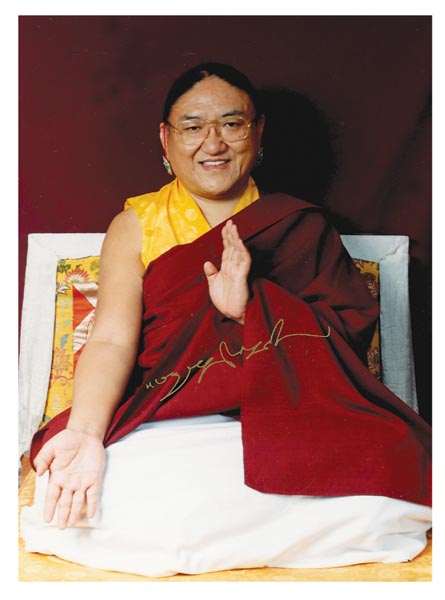
His Holiness the 41st Sakya Trizin during the period of establishing Dharma centers in India, shown in meditative composure with traditional monastic robes

The Forging of a Master

Spiritual Education & Training

His Holiness received an extraordinarily comprehensive spiritual education from the greatest masters of his time — training that encompassed every aspect of the Sakya intellectual, contemplative, and ritual heritage.

📜

Lam Dre Transmission

Received the complete "Path and Its Result" transmission — the crown jewel of Sakya teaching — from his principal masters. This comprehensive system encompasses both the esoteric Lamdre Lobshe (for the monastics) and the exoteric Lamdre Tsokshe (for the general assembly), representing the fullest integration of sutra and tantra in Tibetan Buddhism.

🧘

Tantric Initiations

Mastered the elaborate systems of Hevajra, Chakrasamvara, Vajrayogini, Manjushri, and countless other deity practices that form the experiential core of high tantric Buddhism. Each initiation represents an empowerment to practice specific meditation techniques designed to rapidly accelerate the path to enlightenment.

📚

Buddhist Philosophy

Studied deeply in the traditions of Madhyamaka (Middle Way) philosophy, Yogacara (Mind-Only), and Pramana (Buddhist logic and epistemology). His mastery of these philosophical systems allowed him to engage with and integrate the full breadth of Indian Buddhist intellectual heritage as it was preserved and developed within the Sakya school.

🎭

Ritual Arts & Ceremony

Trained extensively in the vast corpus of Sakya ritual practice — including mandala construction, sacred dance (cham), chanting, and the complex ceremonial protocols that govern empowerments, consecrations, and communal religious observances. These practices serve as the living interface between the esoteric teachings and the broader Buddhist community.