The Path and Its Result
The Lam Dre is the crown jewel of the Sakya tradition — a comprehensive system of Buddhist practice that integrates sutra and tantra into a single, coherent path leading from the initial spark of spiritual aspiration to the full blossoming of complete Buddhahood. Originating with the great Indian mahāsiddha Virūpa, this teaching represents the most precious and closely guarded transmission of the Sakya lineage.
From Virūpa to the Present Day
The Lam Dre teaching traces its origin to the great Indian mahāsiddha Virūpa, who lived in the 8th or 9th century CE. Virūpa was a senior monk at the renowned Nalanda University who, after years of seemingly fruitless meditation practice, experienced a sudden and complete awakening through the blessings of the wisdom deity Nairātmyā. In a single night, he attained the highest levels of realization, manifesting extraordinary powers that amazed both humans and gods.
The teachings that Virūpa subsequently transmitted — known as the Vajra Verses (Vajragāthā) — encapsulate the entire path to enlightenment in stunningly compressed poetic form. These 73 verses, dense with meaning and layered with esoteric significance, became the root text upon which the entire Lam Dre system is built. Every word carries multiple levels of interpretation, from the most accessible ethical teachings to the most profound tantric instructions.
The transmission passed through a succession of Indian masters before reaching Tibet through the translator Drogmi Lotsāwa (992–1072), who brought it to the Khön family. It was Sachen Kunga Nyingpo (1092–1158), the first of the Five Venerable Superiors of Sakya, who systematized the Lam Dre into its current comprehensive form, enriching Virūpa's root verses with extensive commentaries drawn from his own profound realization.
The Three Continua
The Lam Dre is organized around three fundamental "visions" or "appearances" — progressive stages of understanding that transform the practitioner's relationship with reality from confusion to complete awakening.
The first stage addresses the practitioner's ordinary, deluded perception of reality. Here, the teachings provide the foundational understanding of suffering, impermanence, karma, and the precious human birth. These contemplations generate the urgent motivation to seek liberation — what Buddhists call "renunciation" or "the determination to be free." Without this foundation, all subsequent practice lacks the necessary motivational force.
The second stage encompasses the entire path of meditation practice — from the initial cultivation of calm abiding (shamatha) and special insight (vipassana) through the progressive stages of tantric practice. Here, the practitioner works with visualization, mantra, subtle energy channels, and the fundamental nature of mind itself. The "experiences" that arise are signs of deepening realization, guiding the practitioner ever closer to the direct perception of reality.
The final stage represents the fruition of the path — the complete and irreversible realization of the true nature of reality. In this vision, all appearances are recognized as the spontaneous display of primordial wisdom. The dualistic perception that separates self from other, samsara from nirvana, dissolves in the recognition that all phenomena have always been the expression of the enlightened ground. This is not mere intellectual understanding but direct, unmediated experience — the fruit that was inseparable from the path all along.
Architecture of Awakening
The condensed essence of the entire path, composed by the mahāsiddha Virūpa — each verse a gateway to multiple levels of meaning from ethical conduct to the highest realization.
Lamdre Tsokshe (common assembly) and Lamdre Lobshe (restricted assembly) — two complementary streams ensuring the teaching reaches practitioners at every level of preparation.
The four empowerments of the Hevajra cycle — vase, secret, wisdom, and word — each progressively unveiling deeper dimensions of the practitioner's own buddha nature.
A Living Teaching
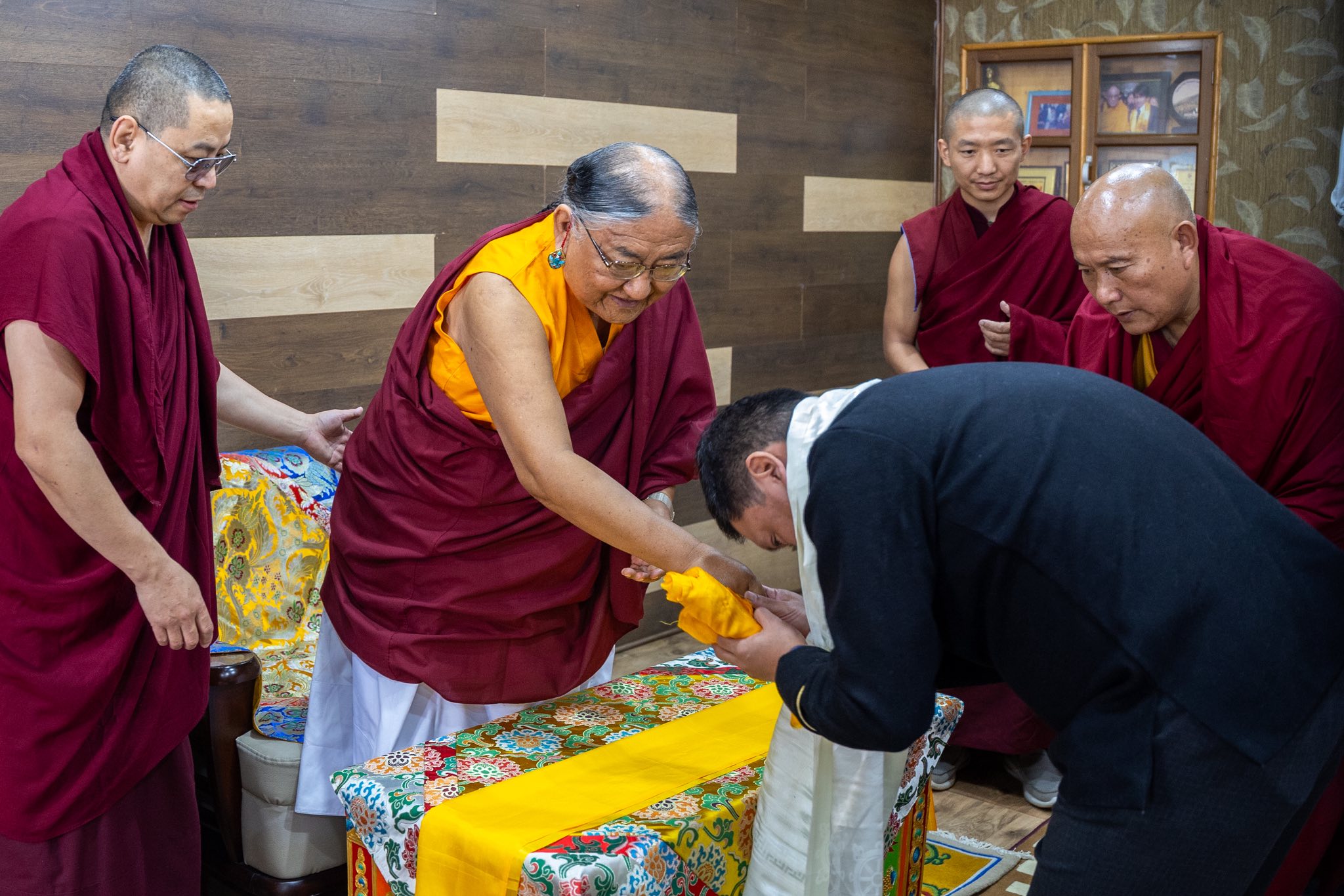
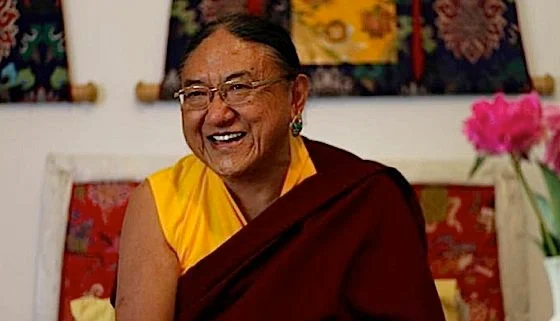
His Holiness the 41st Sakya Trizin has bestowed the Lam Dre teachings on numerous occasions throughout his life, each conferral a major event in the Buddhist world drawing thousands of monks, nuns, and lay practitioners from across the globe. These teaching sessions typically span several weeks and represent the most comprehensive and precious transmission that the Sakya school has to offer.
The significance of the Lam Dre for contemporary practitioners lies in its remarkable comprehensiveness and internal coherence. Unlike many Buddhist teaching systems that address only particular aspects of the path, the Lam Dre provides a complete framework that integrates ethics, philosophy, meditation, and tantric practice into a single, seamlessly unified system. For the committed practitioner, it offers everything needed for the journey from initial aspiration to ultimate realization.
The Lam Dre also holds immense significance for the preservation of Tibetan Buddhist heritage. As the most precious teaching of the Sakya school, its survival through the upheavals of exile represents a triumph of human spiritual endeavor over political destruction. Every time His Holiness bestows the Lam Dre, he renews and strengthens the chain of transmission that connects contemporary practitioners to the original awakening of Virūpa more than a thousand years ago.